Loading...
Serving Norwich, CT and surrounding areas. (959) 234-0488
Cold floors and climbing heating costs point to one of the most overlooked problems in older Norwich homes. We insulate and seal your crawl space so heat stays where it belongs and moisture stops getting in.
Crawl space insulation in Norwich, CT acts as a thermal barrier between the cold ground beneath your home and the living spaces above it, most jobs are completed in one to two days with no need to vacate your home.
If you have cold kitchen or living room floors in winter, a persistent musty smell on the first floor, or heating bills that keep rising without explanation, your crawl space is likely the source. In Norwich, where many homes were built before modern insulation standards existed, crawl spaces are one of the most consistent and overlooked sources of heat loss.
Because crawl spaces are also prone to moisture problems in this climate, a thorough job includes more than just insulation. If the existing material has already been damaged by water or animals, it needs to come out first - which is where our insulation removal service fits in before any new material goes in.
If walking across your kitchen or living room floor in winter feels noticeably cold despite the heat running, the crawl space below is not properly insulated or sealed. This is one of the most common complaints from Norwich homeowners in older homes, and it is a direct sign of heat escaping downward into the ground.
A persistent musty or earthy odor in first-floor rooms or near floor vents often signals moisture buildup in the crawl space below. In Norwich, where spring snowmelt and proximity to river corridors raise groundwater levels, this kind of moisture intrusion is common and can lead to mold growth if left unaddressed.
If you have looked into your crawl space and noticed insulation hanging down from the floor joists, looking dark or wet, or falling away in sections, it has absorbed moisture and is no longer effective. Older fiberglass batts in particular tend to sag over time, especially in homes near Norwich's river corridors where humidity runs higher year-round.
If a plumber has flagged pipes in your crawl space as vulnerable to freezing, or if you have experienced a freeze in the past, the space is not adequately protected from the cold. Norwich's sustained below-freezing temperatures in January and February make uninsulated crawl spaces a real risk for exposed plumbing.
We offer two primary approaches to crawl space insulation, and the right choice depends on how your space is built and what problems you are dealing with. For homes with vented crawl spaces in reasonably good condition, insulating the floor joists with fitted batt material creates an effective thermal barrier between the cold ground and your living areas. This approach is straightforward, works well in most Norwich homes, and is often paired with a crawl space vapor barrier on the ground to limit moisture rising from the soil.
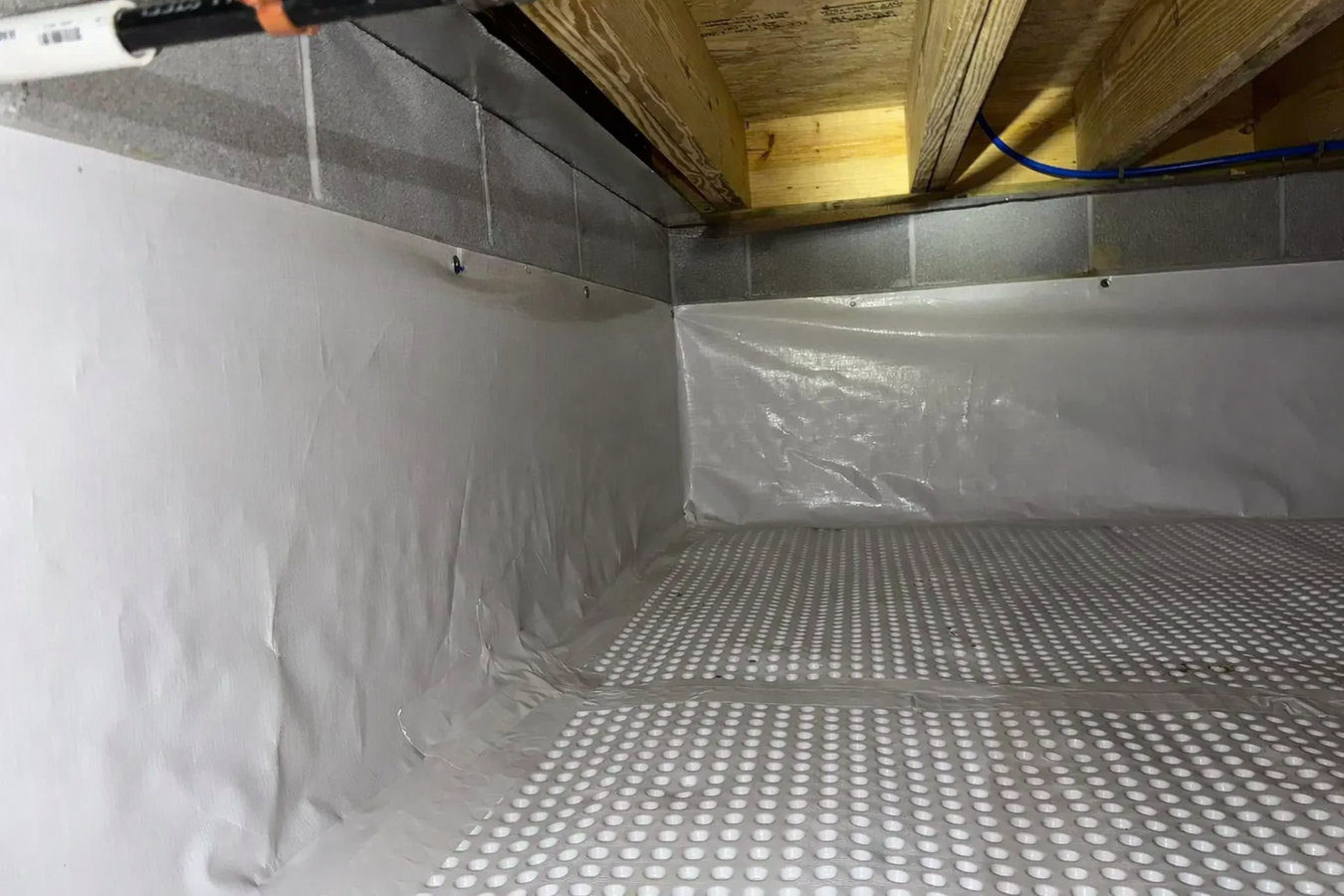
For homes with persistent moisture problems, crawl space encapsulation is the more thorough solution - sealing the walls, floor, and all openings so the space is treated as part of the conditioned home rather than a gap between the house and the ground. In either case, we seal air leaks around pipes, ducts, and penetrations before insulation goes in. Skipping that step is the single biggest reason crawl space insulation underperforms. If old material is present and needs to come out first, we handle wall insulation and removal as part of a coordinated project when needed.
Best for vented crawl spaces in good condition where the primary goal is stopping cold air from reaching the floor above.
Right for homes with recurring moisture issues, musty odors, or crawl spaces near Norwich's river corridors where groundwater is a seasonal concern.
Combines floor joist insulation with a ground-level vapor barrier for homes that need both thermal performance and basic moisture control.
For crawl spaces where existing insulation has failed - we remove the old material, address any moisture or pest damage, and install correctly fitted new insulation.
Norwich sits at the confluence of the Shetucket and Thames rivers, and parts of the city experience elevated groundwater and seasonal flooding that pushes moisture directly into crawl spaces. Even homes not in a designated flood zone can see seasonal moisture intrusion during spring snowmelt or after heavy rain. Combined with cold winters that regularly drop below freezing from November through March, Norwich crawl spaces face more stress than those in more moderate climates. Many homes in established neighborhoods were built before 1960 with little or no crawl space insulation, meaning decades of exposure to these conditions with nothing in place.
We serve crawl space insulation customers throughout eastern Connecticut, including homeowners in Ledyard and Preston, where older homes and wooded lots create similar crawl space challenges. Connecticut homeowners may also be eligible for rebates through the Energize CT program - the Energize CT website has current program details and can help you understand what is available before you commit to a project. The U.S. Department of Energy also provides guidance on crawl space insulation approaches for homeowners who want to understand the technical options before making a decision.
We reply within one business day. We will ask about your home's age, the size of your crawl space if you know it, and whether you have noticed moisture, cold floors, or musty odors - so we arrive ready to assess the right solution.
We inspect the crawl space in person - checking existing insulation, moisture levels, venting, and any rot or pest activity. This visit takes 30 to 60 minutes. You get a written, itemized estimate and a plain-language explanation of what we found before any work begins.
The crew accesses the crawl space through the exterior hatch or interior access panel. Most jobs finish in a single day. You will hear activity below the floor, but your daily routine is not disrupted. You do not need to leave the home.
Before we leave, we walk you through the finished work and confirm the space is clean and properly sealed. We will let you know if any follow-up is needed - including whether your project may qualify for a Connecticut utility rebate through Energize CT.
Written estimates, no pressure. We reply within one business day.
(959) 234-0488We seal gaps around pipes, ducts, and penetrations before any insulation goes in. This step is where most contractors cut corners - and it is the single biggest reason crawl space insulation fails to deliver the energy savings homeowners expect. We do not skip it.
In Norwich, where river proximity and cold winters create real moisture risk, we assess the crawl space for water intrusion, drainage patterns, and existing vapor control before recommending any approach. Installing insulation over an active moisture problem wastes money and causes it to fail faster.
Many Norwich homeowners qualify for rebates through Connecticut's Energize CT program that can meaningfully reduce project costs. We are familiar with what qualifying projects look like and can help you understand what you may be eligible for before you decide. For independent guidance on the program, see energizect.com.
When a permit is required for crawl space work in Norwich, we handle it - you do not need to deal with the Building Department yourself. We also document the completed work in writing, which protects your investment and gives you something concrete to share if you ever sell the home.
Every crawl space job ends with a walkthrough confirming the space is clean, sealed, and properly insulated. If something is not right, we come back and make it right - that is the standard we hold ourselves to on every project.
Pair crawl space work with wall insulation to address the full thermal envelope of your Norwich home from floor to exterior walls.
Learn MoreA ground-level vapor barrier controls moisture rising from the soil and extends the life of your crawl space insulation significantly.
Learn MoreNorwich winters don't wait - lock in your installation date before the cold sets in and heating costs climb.